A Road Through the Forest: What Price Are We Willing to Pay for Development?
Kenya is a country on the move. New highways, railways, housing projects, and public infrastructure are transforming our economy and connecting communities. Development is essential. It creates jobs, improves transport, and drives economic growth.
But as we celebrate progress, we must also ask a difficult question:
Can we build Kenya's future without destroying the very ecosystems that sustain it?
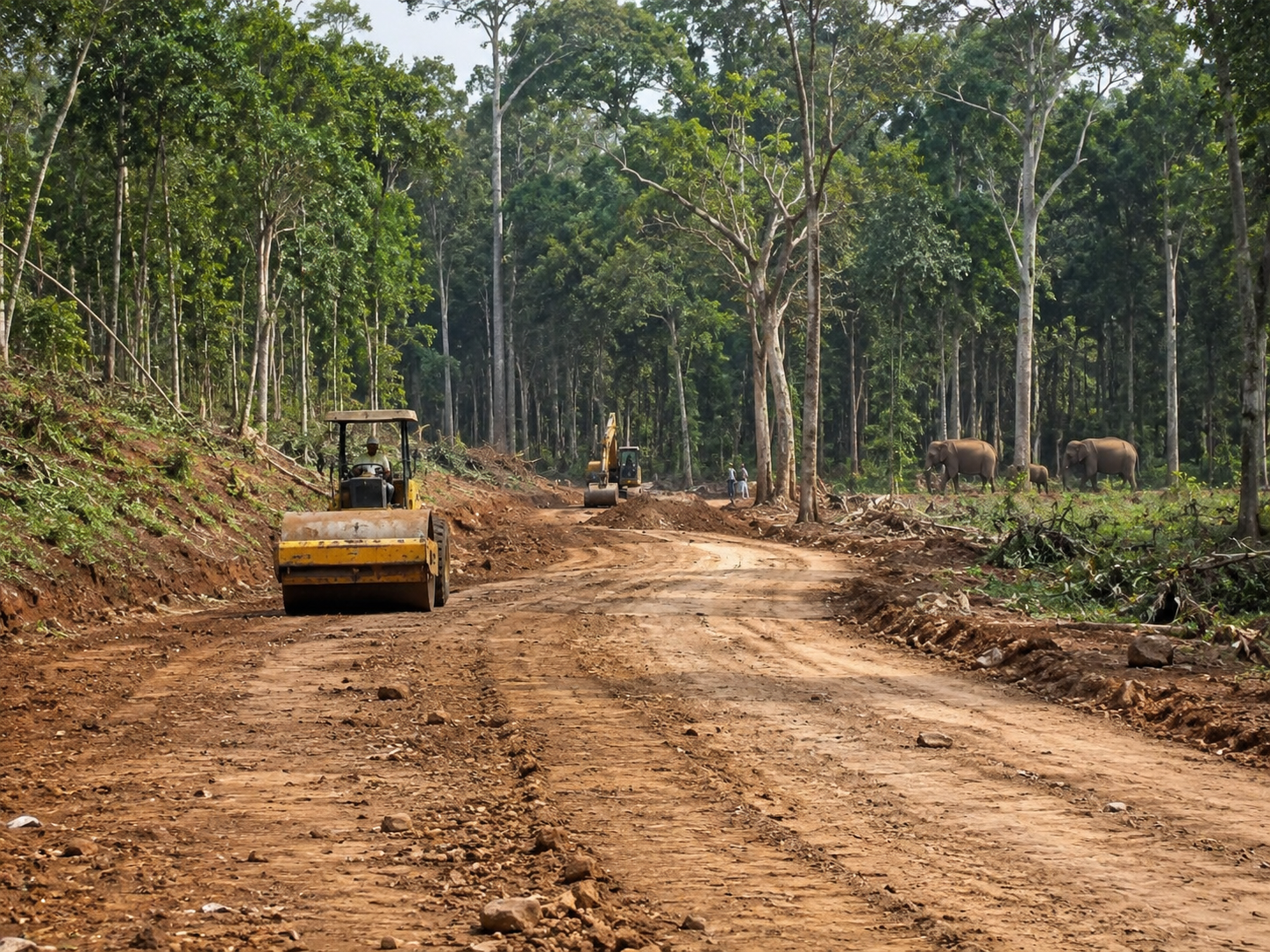
This question has come into sharp focus following the controversy surrounding proposed developments within Imenti Forest in Meru County, where plans linked to a new State Lodge, airstrip, and access roads have sparked public debate. Conservationists argue that constructing infrastructure inside a protected forest threatens biodiversity, wildlife habitats, and one of Kenya's critical water catchment ecosystems. Government officials, on the other hand, maintain that the project is intended to improve accessibility and support national development.
Regardless of where one stands in the debate, one fact remains undeniable:
Forests are not empty land waiting to be developed. They are living ecosystems that support life.
Every tree plays a role. Forests absorb carbon dioxide, regulate rainfall, protect rivers, prevent soil erosion, and provide habitats for countless plant and animal species. They also act as natural shields against the growing impacts of climate change.
When forests are fragmented by roads and infrastructure, the consequences often extend far beyond the construction site. Roads open previously protected areas to increased human activity, illegal logging, land encroachment, and habitat destruction. Once these ecosystems are disturbed, restoring them can take decades,if restoration is even possible.
This debate is particularly important for Kenya.
The country has already experienced severe climate-related disasters in recent years. Prolonged droughts have devastated crops and livestock, while intense rainfall has caused deadly floods, displaced thousands of families, and damaged critical infrastructure. Scientists continue to warn that protecting forests is one of the most effective ways to strengthen climate resilience and safeguard water resources for future generations.
Development and conservation should never be viewed as opposing goals.
Kenya needs roads. Kenya needs schools. Kenya needs hospitals and modern infrastructure.
But Kenya also needs its forests.
True development is not measured only by the number of roads we build. It is measured by whether future generations inherit clean rivers, healthy forests, fertile land, and breathable air alongside modern infrastructure.
This is why environmental conservation cannot be left to governments and policymakers alone.
It begins with each of us.
When we compost organic waste instead of sending it to landfills, we reduce pollution.
When we carry reusable water bottles and shopping bags, we reduce plastic waste.
When we conserve water, plant indigenous trees, or participate in community clean-up activities, we become active stewards of the environment.
These may appear to be small actions, but they reflect something much bigger:a commitment to protecting the natural heritage that belongs to every Kenyan.
At Learning for Tomorrow Foundation, we believe environmental responsibility begins with awareness and grows through collective action. Every conversation about conservation matters. Every tree planted matters. Every sustainable choice matters.
The debate over Imenti Forest is about more than one road or one development project.
It is about the legacy we choose to leave behind.
Will future generations remember us as the generation that built without limits—or the generation that proved development and environmental protection can go hand in hand?
Because once an ancient forest is lost, no amount of concrete can replace what nature took centuries to create.
Protect nature today. Build responsibly. Preserve tomorrow. 🇰🇪