
Sudan’s Gold Rush: When Making a Living Becomes a Fight for Survival
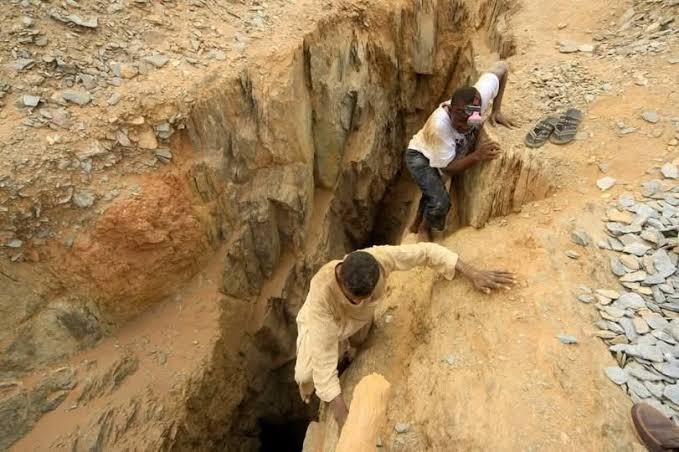
The collapse of an informal gold mine in Sudan’s West Kordofan region has once again exposed the devastating conditions facing young people who are struggling to make a living amid war, unemployment and economic collapse. At least 82 people were killed when the al-Zara gold mine near Nuhud collapsed, while dozens more were injured and others were feared trapped beneath the rubble. Rescue efforts have been severely constrained by the lack of specialised equipment, with local people relying largely on basic tools to search for survivors.
Behind the death toll is a deeper story about young Sudanese people whose economic choices have narrowed dramatically. Since war erupted between Sudan’s military and the Rapid Support Forces (RSF) in April 2023, the country's economy has been devastated, livelihoods have disappeared and millions of people have been displaced. For many young people, artisanal gold mining has become one of the few available ways to earn an income. Research on Sudan’s gold sector notes that rising unemployment and economic hardship have pushed many young men towards informal mining as they search for livelihoods.
The tragedy at al-Zara illustrates the price that some of these young workers are being forced to pay. Informal mining sites often operate without adequate safety standards, protective equipment, engineering assessments or specialised rescue capacity. At al-Zara, several adjoining shafts reportedly collapsed, creating a chain reaction in unstable soil. Survivors described rescue efforts carried out through the night, while workers and residents attempted to recover colleagues using the same rudimentary tools used for mining.
For young people, the decision to enter such an environment is rarely simply about seeking wealth. It is often about survival. In a country where the war has destroyed businesses, disrupted agriculture, displaced communities and weakened formal employment opportunities, the goldfields can appear to offer an immediate source of income. Yet the work exposes miners to collapsing shafts, hazardous chemicals and other occupational risks. Artisanal and small-scale mining accounts for much of Sudan’s gold production, but much of it occurs outside the safeguards associated with formal mining operations.
There is also a painful contradiction at the centre of Sudan’s gold economy. Gold is one of the country's most valuable natural resources, yet the people extracting it often remain among those facing severe economic insecurity. Chatham House notes that artisanal and small-scale mining makes up the majority of Sudan's gold production and that gold has become deeply connected to the country's conflict economy.
The tragedy therefore raises questions that extend beyond the mine itself. How can young people build secure livelihoods when conflict has destroyed conventional employment? What happens when valuable natural resources become one of the few remaining sources of income, but extracting them places workers' lives at extraordinary risk? And what opportunities can be created so that young people do not have to choose between unemployment and dangerous work?
The 82 lives lost at al-Zara should be remembered not only as victims of a mine collapse, but as people who were attempting to work and provide for themselves and their families in extraordinarily difficult circumstances. Their deaths highlight the urgent need for safer livelihoods, decent employment opportunities, skills development and stronger protections for workers in Sudan. For the country's young generation, rebuilding cannot simply mean ending the conflict; it must also mean creating an economy in which earning a living does not require risking one's life.